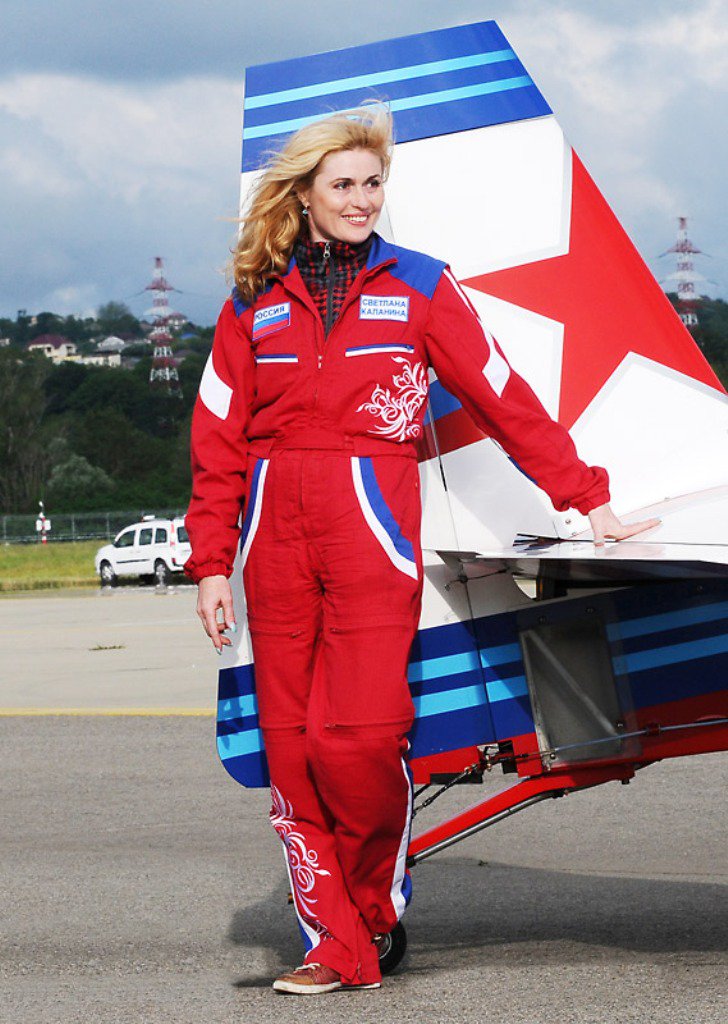
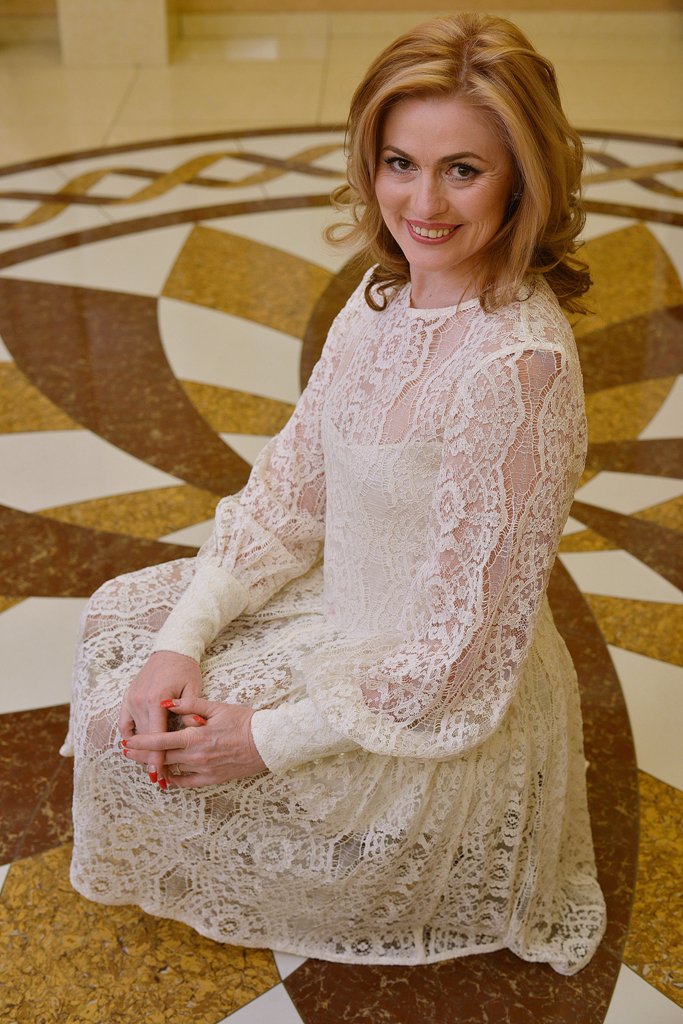
Interview in the magazine "Eyewitness"
Svetlana Kapanina's name is known all over the world. She has won 74 gold, 30 silver, and 13 bronze medals at the World, European, and World Cups. A multiple winner of world, European and Russian competitions, Svetlana has gained fame as the best in her field. Her awards and regalia can be listed for a very long time: the Order of Honor, the Medal of the Order of Merit for the Fatherland, II degree, honorary citizen of the State of Oklahoma (USA) and many others.
One of the highest awards, the Order of Courage, was presented to the pilot by Russian President Vladimir Putin in 2014. It was only in 2015 that Svetlana Kapanina was finally awarded the title of Honorary Citizen of the Kurgan Region.
In the heart is Russia
She admits: if there is a war, join the ranks of the defenders of the country without hesitation. And there is no need to look for other reasons than the one that is absorbed with mother's milk: Russians have always been strong in their unity, which was especially evident in difficult times.
"We are invincible. Simply because we live not because of, but in spite of. Who knows, our people would have this spirit if they lived easily and smoothly. It seems to me that the phrase "Whoever came to us with a sword will die by the sword" is the motto of our people. And it remains so, despite the fact that the patriotic education of the new generation is "lame" today," says Svetlana Kapanina.
The pilot is convinced that patriotic education of children and youth should come first, without it there is no future. And this education should not be limited to the proclamation of slogans, conversations and "classroom hours" in schools. Guys should have an example, they need people to look up to.
"I am sure that everything can still be fixed, to instill in children a love for sports, not only for Olympic sports, but also for technical ones: martial arts, aviation sports, that is, for those areas that build character," Svetlana is convinced.
A sky accessible to everyone
Svetlana Kapanina recalls how proud the Soviet Union was of its aviator athletes. They had no equal in the world. Aviation was the most prestigious sport, and aerobatics masters were the country's sports elite.
"Provincial aviation clubs used to be well-developed. The instructors, coaches, and athletes were so strong, and the training system itself was organized at such a high level that there were simply no weak pilots left. After all, in order to qualify for the World Championships, you first had to win zonal and district competitions and become the best in Russia and the Soviet Union. And when we came "to the world", we had no equal. Now we've practically lost it all. The production of the world's best Russian Sukhoi aerobatic aircraft has long been closed, and they are also not producing engines for them. The clubs are closed and there is no funding… Where would the youth in the sky come from?" the pilot laments.
Svetlana Kapanina is also concerned that the closure of clubs in the regions has deprived aviation of the necessary filter through which future pilots passed. "Today, children come to flight schools without practical flights, without understanding the complexity of the flying profession, without feeling the sky. They will spend a year or two of their lives in flight schools to realize that they are not ready or able to connect the future with aviation. These may be their personal, spiritual, psychological, or physical qualities that no medical commission can determine. At the same time, the state spends a huge amount of money on training a "failed pilot." That is why it is so important to revive the aviation sport, starting from the regions. The sky should be accessible to everyone, and only by touching it can you understand whether it has accepted you or not. Have you accepted heaven yourself?"
Another important reason for the revival of aviation clubs should be the training of amateur pilots at their base. We have a huge country and we have to fly in it almost as freely as we travel by car…
About creators and "cabbies"
Svetlana does not like to discuss the actions of her colleagues and their training. Refers to those who have the power to change the situation. "The officials responsible for aviation in our country must finally understand that without aviation sports, without aerobatic skills, a pilot is just a cab driver. We won't have world-class professionals if we train pilots without aerobatics, whether military or civilian. Every pilot should feel the aircraft and know its capabilities 100%, and these qualities cannot be acquired on simulators and on route flights," Svetlana Kapanina believes.
In England, experts from the Royal School of Pilot Training conducted an analysis of plane crashes caused by pilots. It turned out that in 12 years there were 10 of them. The reason for the emergency was the unpreparedness of the pilots to operate the aircraft in an emergency situation.
"Yes, they were taught how to fly correctly, they practiced their actions thousands of times on simulators. But psychologically and practically, these pilots were not ready to act competently in an emergency situation. After all, no simulator can simulate an airplane entering an uncontrolled flight mode. And if the pilot has only a theoretical understanding of the corkscrew, he will never be able to get the plane out of this rotation, he simply will not be able to understand the nature and direction of rotation. Accordingly, the withdrawal actions will be 100% erroneous. One of the main disadvantages of such applied, that is, simulator training is the belief that everything can be played back and a mistake can be corrected in the next game.
The pilot is used to the fact that you can just restart the simulator and start all over again. This is impossible in real life," the country's top pilot explains her position.
Understanding of the problem came to the leadership of the Royal School. They want to make a proposal that all civilian pilots must undergo emergency training and improve their skills in this area.
"This is a vital decision. How many planes are fighting because the pilot confused the flight horizon, pulled the handle (steering wheel) on himself instead of "giving himself away" and providing the aircraft with speed, or failed to get out of the tailspin…
In short, everyone needs an aerobatics school – both civil and, of course, military aviation," Svetlana Kapanina notes. Russia needs a Center for advanced aviation skills, the pilot is sure: "It is imperative that our children fly, so that they have excellent flight training. So that they glorify our country all over the world in sports, military and civil aviation. Our country has always been a powerful aviation power. We must continue to be like that."
Through thorns to the stars
The life of a pilot would be easier if the main fight took place only in the sky. But, having decided to become an aerobatic pilot, Svetlana left herself no choice: harassment, intrigue, and gossip from male colleagues and less successful female athletes began.
The starting point of the constant struggle for the right to be equal was the first victory at the World Cup. Famous aerobatics masters could not accept that the prestigious award went to a woman. As Svetlana's colleague, Igor Semenov, a well-known Kurgan pilot and aviation veteran, said about that case: "It was such a convincing victory that it literally "smeared" the national teams of other countries."
In 1996, the Governor of Oklahoma awarded Svetlana Kapanina the title of honorary citizen. And the American athlete, a multiple American champion in the overall standings, simply does not come to the event, ignoring the closing ceremony of the competition, the raising of the national flag and the presentation of awards. It was a serious offense for her, as for most of the others, because the woman competed on equal terms with men in the "men's" sport.
Some colleagues on the national team and officials also put sticks in the wheels. For example, even under the previous leadership of the Kurgan region, documents were repeatedly submitted for the presentation of Svetlana Kapanina to the title of Hero of Russia. They were also approved at the Presidential envoy's office in the Ural Federal District. However, somewhere along the way to the Kremlin's award department, the documents were "lost." "It's okay, what kind of hero am I?" Svetlana tactfully closes the topic.
Nevertheless, Svetlana has achieved worldwide recognition. But it was given to the champion with incredible efforts, only thanks to the desire for victory and faith in justice. The risk is only justified "I have no goal: to be better than men. I am a woman and I want to remain one. And aviation is just a way of life," Svetlana shares her concerns. – A man was created by God stronger than women, so why break this rule? But everything happens in life, and if a woman surpasses you in your profession, then be a man, don't blame her for it, but improve yourself." She is beautiful in her sincerity and vulnerability. The main dream is to have happy children. She wants to be with them, to protect them from misfortune.
"With the birth of children comes caution. This is not fear, but an attempt to figure out if it makes sense to take risks. You start to wonder if you want to fly to some cave in the mountains, under a bridge, risk your life - for what and whether someone needs it? Is this risk worth the well-being of your children?", explains Svetlana. But, like any woman, the pilot is no stranger to quite mundane fears: "Mice, spiders?.. No, it's not scary, but it's very unpleasant." Svetlana Kapanina has a rare quality: she loves people and holds no grudge against them. He will close himself off from the world, feel hurt, cry ("Yes, I'm crying too!") and ... fly to new victories.